
Research funding after specialist medical training
The Advanced Clinician Scientist Programme iIMMUNE_ACS supports outstanding, research-oriented physicians after completing their specialist training. It is an extension of the specialist-accompanying Clinician Scientist Programmes at the IZKF (CSPI and II) and the DZI (NOTICE). The funded Advanced Clinician Scientist Fellows are given the opportunity to carry out a research project in the field of immunomedicine alongside their clinical work and to prepare themselves for a clinical-scientific leadership role through an advanced, interdisciplinary training programme. iIMMUNE_ACS guarantees the funded specialists a protected research time of 50%, as well as additional funds for research. An individually appointed team of mentors supports the ACS Fellows in achieving their defined goals. Our flyer
Connection of iIMMUNE_ACS to other research centres at Erlangen
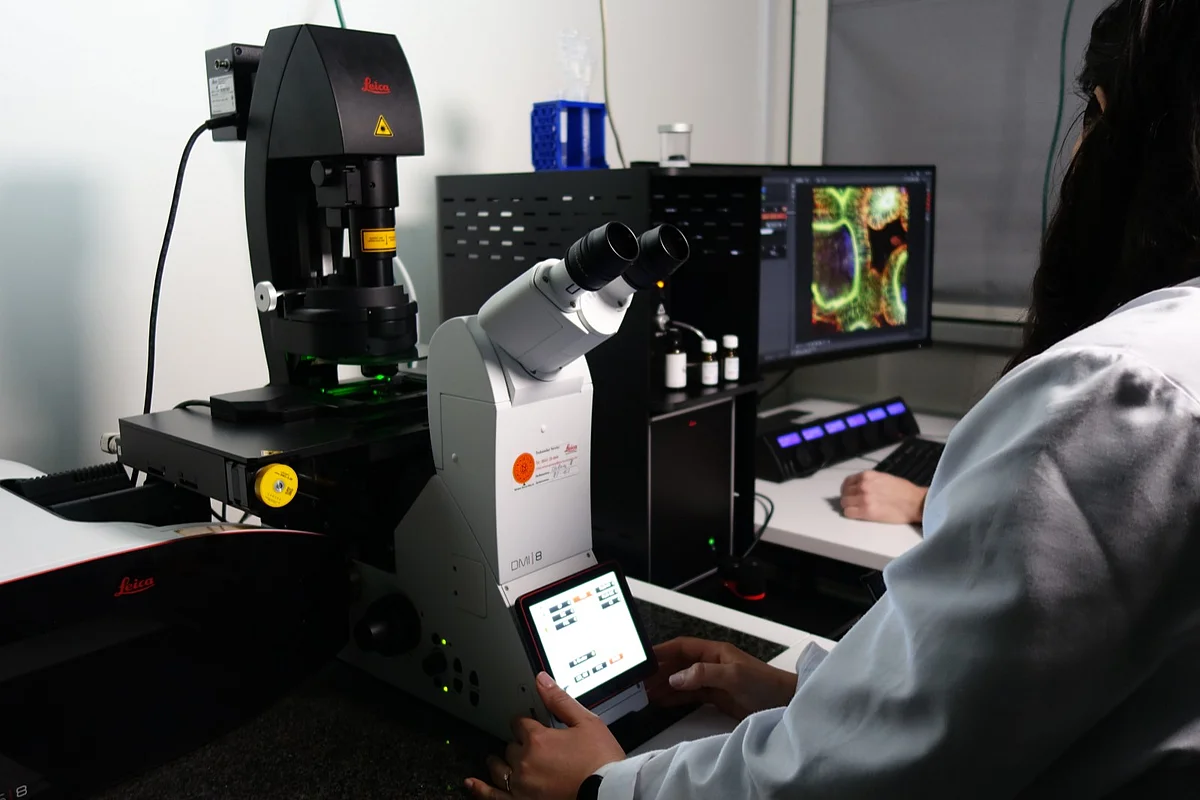
iIMMUNE_ACS enables ACS Fellows to use the existing excellent research infrastructure at Friedrich-Alexander-Universität Erlangen-Nürnberg (FAU). This enables ACS Fellows to expand their knowledge in areas relevant to their research and to learn and apply new techniques. Possible collaborations include the following research centres and research networks at the Erlangen site:
The Erlangen site and the DZI (Deutsches Zentrum Immuntherapie)
At Erlangen University Hospital and FAU Erlangen-Nuremberg, the field of immunotherapy has been continuously expanded in recent years and strengthened through targeted appointments. The German Centre for Immunotherapy (DZI), the Centre for Immunotherapy, Biophysics & Digital Medicine (CITABLE) and the Max Planck Centre for Physics and Medicine (MPZPM) provide a unique research environment for translational research in the field of immunotherapy. CAR-T cell therapy was used to successfully treat lupus erythematosus (2021), myositis and systemic sclerosis (2023), as well as ulcerative colitis (2025) for the first time worldwide at the University Hospital Erlangen. Our alumnus Prof. Fabian Müller played a key role in this development, as did our ACS Fellows Dr Christina Bergmann in the treatment of systemic sclerosis and Dr Moritz Leppkes in the treatment of ulcerative colitis. The results of the world’s largest study to date on the treatment of autoimmune diseases with CAR-T cells – the CASTLE study, conducted at the Erlangen site – now offer cause for hope: they show that a single infusion of CD19 CAR-T cells can halt these autoimmune diseases without the need for further drug therapy (link).
The DZI, a unique institution in Germany, pools the expertise of clinics and research institutes in Erlangen. The aim of the facility is to combine immunomedicine with the latest scientific methods of biophysics and artificial intelligence with digital health technology. Thanks to the interdisciplinary collaboration of various disciplines, immunotherapies for patients with chronic inflammatory diseases, autoimmune diseases and cancer can be applied and further developed here.
Contact and further information
Coordination:Dr. Jasmin Raufer | Program director:Prof. Beate Winner | Substitute Program director:Prof. Maximilian Waldner |
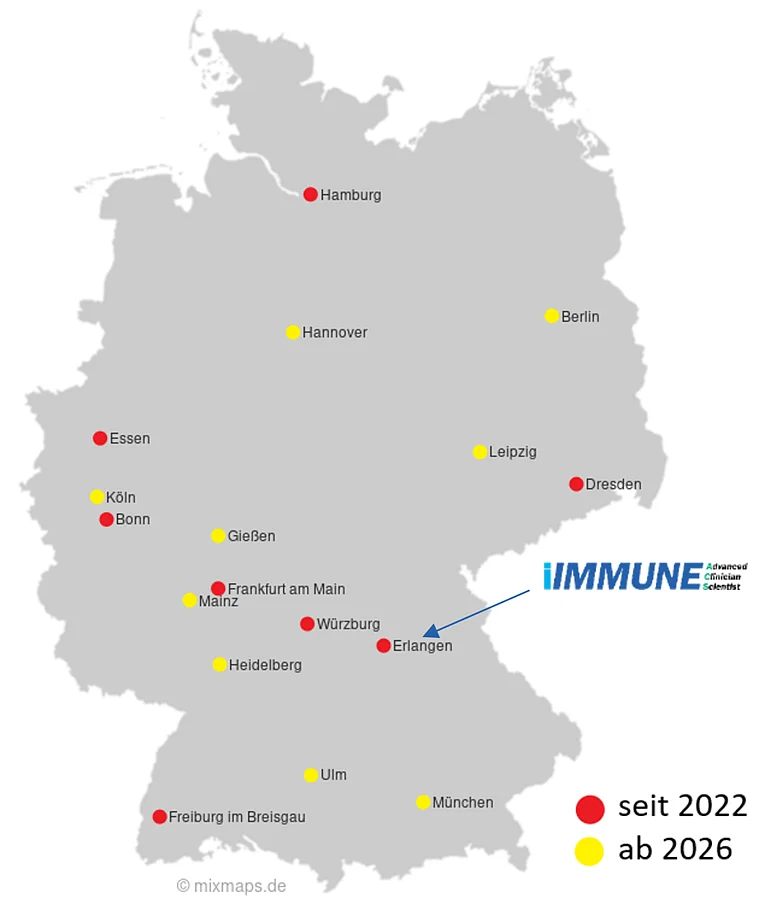
Other ACS locations funded by the Federal Ministry of Research, Technology and Space (BMFTR)
iIMMUNE_ACS is part of a nationwide ACSP funding initiative run by the BMFTR across a total of 17 sites in Germany (8 since 2022 + 9 since 2026). The cross-site collaboration between these ACS programmes on a shared exchange platform not only provides all participating ACS fellows with a wide range of opportunities to exchange ideas and network at joint events across the country, but also enables them to articulate their own needs, thereby strengthening the professional profile of the clinician scientist and establishing it in the long term.